

 Article
  Digital download
  Guide
Guide  Podcast
  Video
Video How much weight can you really lose in 30 days? (Science-backed)

You’ve likely seen the headlines: “Lose 10 pounds in a week!” or “Drop a dress size in 30 days!” These promises are tempting, especially after a long, frustrating weight loss journey. Many of us get caught in a diet cycle, constantly searching for quick fixes, only to feel tired, unmotivated, and back where we started. But focusing solely on the scale within a 30-day window misses the bigger picture.
Sustainable weight loss takes time. It’s a marathon, not a sprint. Here, we’ll dive into the science behind weight loss, explore what’s truly achievable in a month, and reveal the root cause of long-term weight loss struggles.
Beyond the scale: Why sustainable weight loss matters
It’s easy to fixate on scale drops. However, weight loss isn’t instant, and rapid loss often comes at a cost. While initial significant weight loss is possible, it doesn’t always mean it’s healthy or sustainable. Quick fixes usually lead to a cycle of restriction, rebound, and frustration. To end the demotivating diet cycle and achieve lasting results, you need sustainable, health-driven strategies.
The hidden driver: Your metabolic flexibility
To achieve sustainable weight loss, you must address the root cause: improving your metabolic flexibility, which is your body’s ability to efficiently switch between burning carbs and fats for energy. When metabolically flexible, your body readily taps into fat stores, making weight loss easier.
When metabolically inflexible, your body struggles with fat burn, cravings, and low energy. Many deal with stagnant weight loss despite diet and exercise, experiencing easy weight gain from carbs, rapid fatigue during workouts, and constant snacking.
The good news: metabolic flexibility is significantly impacted by lifestyle, and damage from poor habits can be reversed. You can improve your body’s natural fat-burning capabilities. Lumen acts as your personal metabolic guide, helping you understand and improve metabolic flexibility.
Lumen does this by taking your metabolic measurement through a single breath and creating a daily personalized nutrition plan based on your results. It also provides AI health coaching and lifestyle recommendations synced to your real-time measurements. This feedback loop helps you make consistent habit changes to achieve your weight loss goals.


Setting realistic expectations for 30 days
So, how much weight can you lose in a month? Individual results vary, but a healthy, sustainable rate is generally one to two pounds per week [1]. This means a realistic 30-day goal is four to eight pounds. While some, especially with higher starting weights, might see a larger initial drop from water weight, focusing on this range ensures fat loss, not just water or muscle. The goal is lasting change, not a temporary dip on the scale.
Actionable steps for long-term weight loss
Instead of chasing a number, build habits that boost your metabolic flexibility for sustainable weight loss.
Carb cycling
Take your wake-up metabolic measurement to receive your personalized nutrition plan, including guidance on whether to eat low, moderate, or high carb for the day.
Your pre-meal breath helps you determine if your next meal should be a low- or high-carb one. If you’re burning carbs, that’s a sign to eat a low-carb meal. If you’re burning fats for energy, then go for a high-carb meal.
Carb timing
When you eat carbs can significantly impact how effectively your body processes and uses them.
Aligning carbohydrate intake with your body’s natural circadian rhythm by eating more carbs in the morning may optimize glucose metabolism and support better overall health. One study examining this link found that insulin secretion and sensitivity peaked in the morning and declined by the evening, suggesting that the body’s ability to manage glucose is more efficient earlier in the day [2].
Because your mitochondria, your cells’ powerhouses, transition from carb burn to fat burn at rest and while sleeping, consuming late dinners and high-carb meals later in the evening can hinder the overnight shift to fat burn, potentially impairing sleep quality.
Timing carbohydrates around exercise is another effective strategy to boost metabolism. After a workout, you’re more insulin-sensitive, and the carbs you eat can replenish your glycogen, the stored form of glucose in muscles and the liver, and help with recovery and building muscle mass [3].
Carb quality
Aim to eat complex carbs, which provide a steady release of glucose into the bloodstream, helping maintain blood glucose stability, enhance insulin sensitivity, and reduce cravings. High insulin sensitivity means your body needs only a small amount of insulin to help glucose reach your mitochondria and support energy production for daily activities.
The Journal of Clinical Medicine also notes that fiber-rich diets, often derived from complex carbohydrates, improve blood sugar regulation and reduce the risk of developing type 2 diabetes and other metabolic conditions [4].
These are some complex carbs you can include in your diet:
- Whole grains (e.g., brown rice, quinoa, oats)
- Legumes (e.g., lentils, chickpeas, black beans)
- Vegetables (e.g., broccoli, sweet potatoes, squash)
- Fruits (e.g., apples, berries, citrus fruits)
- Nuts and seeds (e.g., almonds, hemp seeds, chia seeds)
Intermittent fasting
Intermittent fasting is another tool to improve metabolic flexibility, helping your body shift from carb burn in the fed state to fat burn in the fasted state. You can personalize your intermittent fasts by measuring your metabolism with Lumen. Lumen tells you exactly how long to fast for your body to maximize fat burn and avoid muscle breakdown.
This is how you can find your perfect fasting window:
- Take your metabolic measurement when you wake
- Continue measuring your metabolism every 1-2 hours
- Still in fat burn? Great, keep going
- Reached carb burn? That’s your sign to end your fast
- Eat something nutritious to fuel up your metabolism
Weightlifting
Building and maintaining your muscle mass is important for metabolic flexibility. Your muscles are packed with mitochondria and house most of your glycogen, your body’s glucose storage. This means the more muscle mass you gain, the more mitochondria and glycogen stores you’ll have.
As a result, your muscles can efficiently use carbs when you need an energy boost, ensuring less glucose is stored as fat. It also helps your mitochondria better metabolize fat at rest or during low-intensity activities.
Take a pre-workout breath measurement to determine if you should fuel up before your high-intensity workout. If you’re burning fat, that’s a sign your glycogen stores are low, and you should eat a fast-digesting carbohydrate source like a banana to avoid muscle breakdown.
Stress management
Chronically elevated cortisol interferes with your body’s capacity to burn fat for fuel. When cortisol is consistently elevated, your mitochondria become more reliant on carbs and less efficient at burning fat for fuel. This reduces your metabolic flexibility. Essentially, chronic stress makes your mitochondria over-dependent on carbs for fuel. Over time, they “forget” how to burn fat efficiently. Follow some stress management strategies here to keep your cortisol balanced.
Sleep quality
Sleep is regulated by the circadian rhythm, your body’s 24-hour internal clock, which is naturally aligned with the day-night cycle. While you sleep, your mitochondria have time for maintenance, repair, and reproduction, so they can continue to produce the energy you need. However, when the circadian rhythm is disrupted due to inadequate, irregular, or low-quality sleep, mitochondrial repair and function may be compromised [5], impacting your metabolic health. Check out our 9 strategies to feel more rested.
Monitor your Flex Score
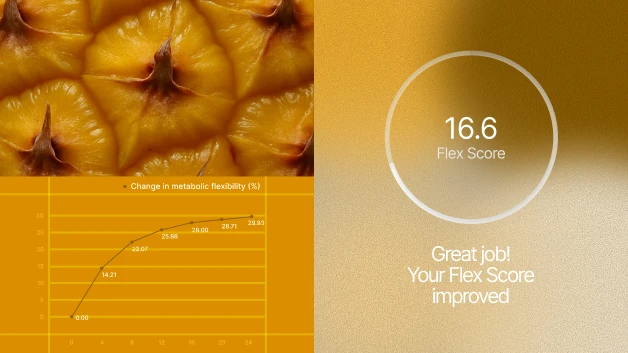
Use Lumen daily for personalized feedback on how your body is responding to your lifestyle choices. See how your Flex Score, a measurement of your metabolic flexibility, improves over time.
Your journey to lasting weight loss starts now
Sustainable weight loss isn’t about deprivation or quick fixes; it’s about understanding and nurturing your body’s metabolism. While the allure of losing a lot of weight in a month is strong, true success lies in building metabolic health for long-term well-being. By improving metabolic flexibility, understanding your body’s needs, and making consistent, informed choices, you can break free from diets. Lumen empowers you with insights to make these changes, guiding you toward a healthier, more energetic, and metabolically flexible you. Start today, not just for 30 days, but for a lifetime of health.
FAQ
Q: Is it healthy to lose a lot of weight quickly?
A: While initial rapid weight loss can occur, especially for those with higher starting weights, a healthy and sustainable rate is generally one to two pounds per week. Losing too much too quickly can lead to muscle loss, nutrient deficiencies, and make it harder to keep the weight off long-term.
Q: How does metabolic flexibility help with weight loss?
A: Metabolic flexibility allows your body to efficiently switch between burning carbs and fats for energy. When you’re metabolically flexible, your body can more easily tap into fat stores for fuel, leading to consistent energy and making it easier to manage your weight.
Q: Can I improve my metabolism if I’m older or going through menopause?
A: Yes! While hormonal changes can impact metabolism, lifestyle factors like diet, exercise, sleep, and stress management significantly influence metabolic health and flexibility. Lumen can help you understand your unique metabolic responses and make adjustments to support your body.
Q: What are common signs of poor metabolic health?
A: Common signs include struggling to lose weight despite diet and exercise, easy weight gain from carbs, rapid fatigue during low-intensity workouts, constant snacking, and a lack of energy.
Q: How does Lumen help me understand my metabolism?
A: Lumen measures your metabolism in real-time through your breath, showing whether your body is burning carbs or fat for energy. This daily insight helps you understand how your food, activity, and sleep choices impact your metabolic flexibility and guides you toward better health decisions.
Sources
[1] Jakicic, J. M., Clark, K., Coleman, E., Donnelly, J. E., Foreyt, J., Melanson, E., Volek, J., Volpe, S. L., & American College of Sports Medicine (2001). American College of Sports Medicine position stand. Appropriate intervention strategies for weight loss and prevention of weight regain for adults. Medicine and science in sports and exercise, 33(12), 2145–2156. https://doi.org/10.1097/00005768-200112000-00026
[2] Zhao, L., Hutchison, A. T., & Heilbronn, L. K. (2021). Carbohydrate intake and circadian synchronicity in the regulation of glucose homeostasis. Current opinion in clinical nutrition and metabolic care, 24(4), 342–348. https://doi.org/10.1097/MCO.0000000000000756
[3] Kerksick, C. M., Arent, S., Schoenfeld, B. J., Stout, J. R., Campbell, B., Wilborn, C. D., … Antonio, J. (2017). International society of sports nutrition position stand: nutrient timing. Journal of the International Society of Sports Nutrition, 14(1). https://doi.org/10.1186/s12970-017-0189-4
[4] Hoyas, I., & Leon-Sanz, M. (2019). Nutritional Challenges in Metabolic Syndrome. Journal of clinical medicine, 8(9), 1301. https://doi.org/10.3390/jcm8091301
[5] Richardson, R. B., & Mailloux, R. J. (2023). Mitochondria Need Their Sleep: Redox, Bioenergetics, and Temperature Regulation of Circadian Rhythms and the Role of Cysteine-Mediated Redox Signaling, Uncoupling Proteins, and Substrate Cycles. Antioxidants, 12(3), 674. https://doi.org/10.3390/antiox12030674
Disclaimer
The information provided here is strictly informational and educational. It does not serve as medical advice or a health assessment and is not intended to diagnose, treat, cure, or prevent any disease. Consult with your healthcare professional before making any significant changes to your diet or exercise routine.
 Copy article text
Copy text 

Our Lumen editorial desk includes an in-house team of certified and registered nutritionists and dietitians, scientists, researchers, and writers.
See all articles