

 Article
  Digital download
  Guide
Guide  Podcast
  Video
Video Movember metabolism: Uncovering the link between andropause and weight gain
This Movember, as the spotlight shines on men’s health, we’re discussing andropause and its connection to metabolic health.
As men age, many experience a subtle yet significant shift in their bodies that can feel frustratingly familiar: unexplained weight gain, particularly around the midsection, coupled with a persistent feeling of fatigue and a general decline in vitality.
If you’re a man in your 40s, 50s, or beyond and noticing these changes, it’s more common than you might think. This isn’t just a natural part of aging; it’s often linked to a hormonal transition known as andropause and its profound impact on your metabolic health.
You might have tried various diets or exercise routines, only to find the weight stubbornly clinging on, or even increasing. This can be disheartening, making you feel like you’re fighting an uphill battle against your own body. But what if the key to unlocking sustainable weight management lies not just in counting calories or endless cardio, but in understanding and optimizing your body’s fundamental ability to burn fuel?
This is where metabolic flexibility comes in. It’s how easily your body can switch between carb and fat burn, which can help you reclaim control over your weight, even amidst andropause challenges.
In this Movember metabolic health guide, we’ll explore the intricate relationship between andropause, metabolism, and weight gain. We’ll uncover why your body might be struggling to burn fat efficiently and, most importantly, equip you with actionable strategies to boost your metabolic flexibility, making weight management less of a struggle and more of a sustainable journey.
Andropause: Men’s hormonal shift
Often referred to as “male menopause,” andropause is a natural process characterized by a gradual decline in testosterone levels, typically occurring in men aged 40 to 60 [1].
Testosterone levels typically drop about 1% per year starting in the mid-30s to 40s [1]. As men age, the testes produce fewer hormones because Leydig cells (testosterone-producing cells) work less efficiently [2]. Moreover, sex hormone–binding globulin (SHBG) rises with age and binds more testosterone, reducing free (usable) testosterone in the body.
While it doesn’t involve a complete cessation of reproductive function like female menopause, its effects can be just as impactful on a man’s overall health and well-being.
The symptoms of andropause extend beyond decreased libido or mood changes; they significantly contribute to physical changes, especially weight gain. Here’s how:
Decreased muscle mass
Testosterone plays a crucial role in maintaining muscle mass [3]. As testosterone levels decline, men tend to experience a reduction in lean muscle tissue [4]. This is a critical factor because muscles are metabolic powerhouses. They are packed with mitochondria, the “energy factories” of your cells, and house most of your glycogen stores. The more muscle mass you gain, the more mitochondria and glycogen stores you’ll have, leading to increased fat burn at rest and a quicker shift to carb burn when you need a boost. With less muscle, your body’s resting metabolic rate slows down, making it harder to burn fat.
Less glycogen stores
Because skeletal muscle acts as the body’s biggest glycogen “tank,” when you have less muscles, there’s less tissue available to pull glucose out of the bloodstream and store it as glycogen. This means more glucose can stay in circulation after a carb-heavy meal, and your body may need to produce extra insulin to handle the carb load. Over time, this can contribute to reduced insulin sensitivity. Put simply, with a smaller glycogen “sink,” your carb storage fills up faster. That can lower the amount of carbs you can handle without pushing the extra toward fat storage, especially if you’re in a calorie surplus or insulin-resistant.
Increased fat storage
Lower testosterone levels are directly linked to an increase in abdominal fat, particularly visceral fat [5]. This creates a vicious cycle: low testosterone makes you more likely to gain weight, and greater weight can further reduce testosterone production [4]. This hormonal imbalance shifts your body’s preference from burning fat for energy to storing it.
Less insulin sensitivity
Loss of muscle mass, decreased glycogen stores, and an increase in abdominal fat is the classic “cocktail” for insulin resistance.
Because the muscles are less “thirsty” for carbs, after high-carb meals, there’s a higher chance of sharp glucose spikes and more load on the liver instead of efficient entry into muscle. In other words, it’s harder to move glucose into the muscle, and more goes to the liver and to fat.
Increased abdominal fat, especially visceral fat (fat around the organs), is one of the strongest body composition predictors of insulin resistance. As visceral fat expands, it tends to reduce adiponectin (a hormone that improves insulin sensitivity) and increase other adipokines that promote insulin resistance [6].
Moreover, when fat cells become hypertrophied due to excess fat storage, they attract macrophages that release proinflammatory cytokines, such as IL-6 and TNF-α, which reduce insulin signaling and contribute to insulin resistance [7].
Fatigue and reduced activity
Andropause often brings with it increased fatigue and a general lack of energy. That’s because testosterone helps your body produce and use energy efficiently [8]. When levels drop, your mitochondria (your cells’ energy centers) work less effectively and you can feel more tired [8].
This can lead to reduced physical activity, further exacerbating muscle loss and contributing to a sedentary lifestyle, a major driver of weight gain and metabolic dysfunction.
In essence, the hormonal changes of andropause create an environment where your body becomes less efficient at managing its energy, setting the stage for metabolic inflexibility.
Reclaiming your metabolic flexibility
Achieving metabolic flexibility is crucial to addressing common andropause symptoms, such as weight gain and low energy.
When you’re metabolically flexible, you can more easily lose weight, burn fat, process carbs, feel energized, and improve your body composition.
By focusing on lifestyle strategies that enhance your body’s ability to easily use both carbs and fat for energy, you can counteract the metabolic challenges posed by andropause and pave the way for lasting weight management and improved vitality.
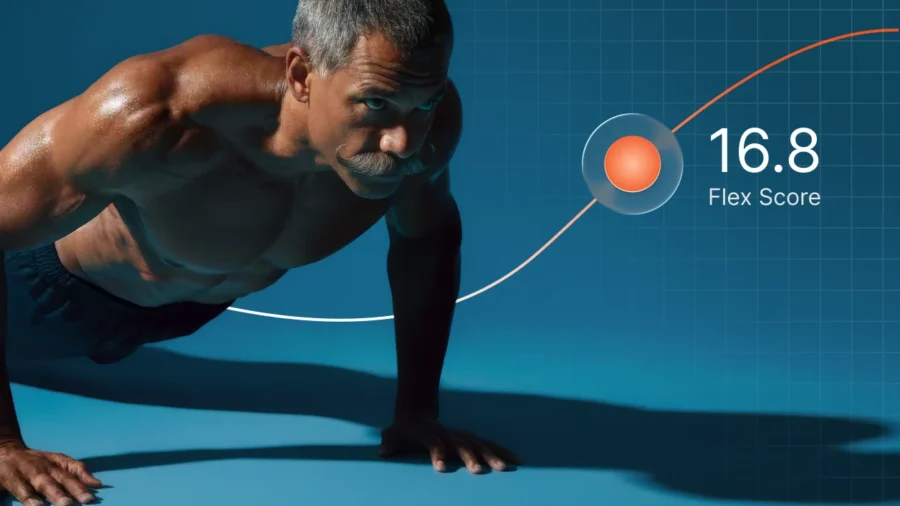
Understanding your body’s current metabolic state is the first step towards change. Tools like Lumen can provide real-time insights into whether your body is primarily burning carbs or fat, tailor your nutrition plan to boost metabolic flexibility, help you see how your body responds to different foods and activities, and enable you to track your metabolic flexibility trends through your Flex Score.
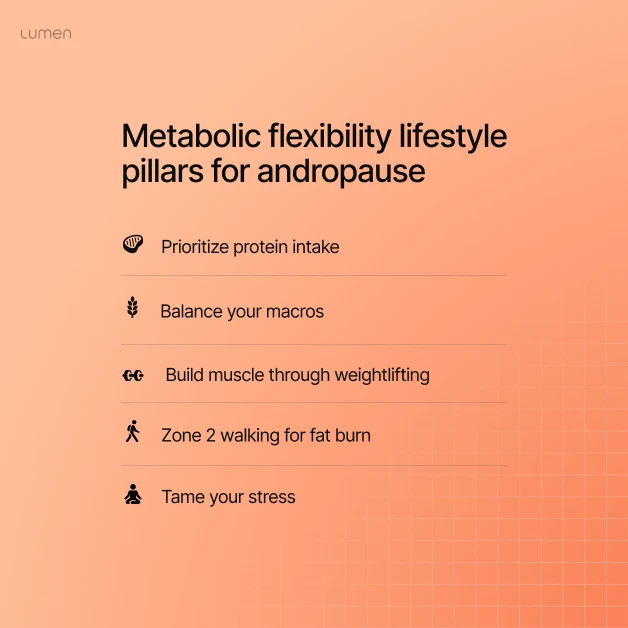
Lifestyle pillars to combat andropause symptoms and reach your goals
1. Prioritize protein intake
Adequate protein intake helps preserve and build muscle mass, which, as we’ve discussed, is vital for a healthy metabolism. Aim for consistent intake of high-quality protein throughout the day to support muscle protein synthesis and satiety.
The Recommended Dietary Allowance (RDA) of 0.8g of protein per kg of body weight daily is often misinterpreted as the optimal intake, when it is actually the minimum amount needed to prevent lean body mass loss. Higher intakes (1.2-2.0 g/kg/day) are recommended for physically active individuals and those with higher protein needs.
How to meet your daily protein goals
Including at least 25g of protein in every meal helps control appetite by decreasing the hunger hormone ghrelin and elevating levels of the satiety hormone peptide YY. For reference, 25g of protein is roughly the size of the palm of your hand for protein-dense foods like meat, fish, or tofu.
2. Balance your macros
Eating a balanced ratio of complex carbohydrates, healthy fats, and high-quality protein, prevents over-reliance on carbs for energy. This balance is crucial for managing blood glucose levels and maintaining glycogen, the body’s form of stored energy.
Aim to eat complex carbs for balanced blood glucose levels. Simple carbs, such as those found in sugary snacks or white bread, cause rapid blood sugar and insulin spikes, leading to energy crashes and increased hunger shortly after eating [9].
Consuming these foods in excess can also contribute to insulin resistance, a condition where cells struggle to absorb glucose effectively. Over time, this can lead to chronic health issues like increased fat accumulation and metabolic dysfunction.
Take a morning metabolic measurement to receive your nutrition plan with an exact macro breakdown for the day tailored to your results.
3. Build muscle through weightlifting
Physical activity is a cornerstone of metabolic health, and for men in andropause, specific types of exercise are particularly beneficial.
Building muscle mass through resistance training is paramount. Your muscles are packed with mitochondria and house most of your glycogen; the more muscle mass you gain, the more mitochondria and glycogen stores you’ll have. More muscle means increased fat burn at rest and a quick shift to carb burn when you need a boost.
Take a pre-workout breath measurement to determine if you should fuel up before your high-intensity workout. If you’re burning fat, that’s a sign your glycogen stores are low, and you should eat a fast-digesting carbohydrate source like a banana to avoid muscle breakdown.
4. Walk in zone 2 for fat burn
Complement weightlifting with zone 2 cardio, such as brisk walking or light jogging. Zone 2 exercise (where you can still hold a conversation but are slightly out of breath) is excellent for improving mitochondrial function and enhancing the body’s ability to burn fat efficiently [10].
5. Time your carb intake
Food timing can significantly impact your metabolism. Research shows that eating carbohydrates earlier in the day aligns with the body’s natural insulin sensitivity peaks, supporting efficient glucose metabolism [11].
On the other hand, consuming high-carb meals later in the evening can hinder the overnight shift to fat burn, potentially impairing sleep quality. Eating an earlier dinner also supports mitochondrial function, allowing a more effective transition to fat burn during sleep.
Timing carbohydrates around exercise is another effective strategy to boost metabolism. You’re more insulin sensitive post-workout, and the carbs you eat can promote glycogen replenishment, recovery, and building muscle mass [12]. When insulin sensitivity is high, your cells can efficiently absorb glucose from the bloodstream and use it for energy. Moreover, improved insulin sensitivity ensures the body can efficiently convert glucose into glycogen rather than fat.
6. Try out intermittent fasting
During fasting, your body undergoes a metabolic shift. Initially, it uses glucose (sugar) as its primary energy source. Once that’s depleted, it moves on to glycogen. As glycogen stores become depleted, your body starts breaking down stored body fat to use as energy. This process is a powerful way to increase fat burn and contributes to metabolic flexibility.
Intermittent fasting trains your body to become more adept at accessing and using its fat reserves. This is particularly beneficial for individuals with stagnant weight loss, as it provides a consistent stimulus for fat oxidation and acts as a metabolic flip switch.
By measuring your metabolism during a fast, Lumen can show you when your body shifts from burning carbs to burning fat. This real-time feedback confirms that your fasting efforts are effectively moving you into a fat-burning state.
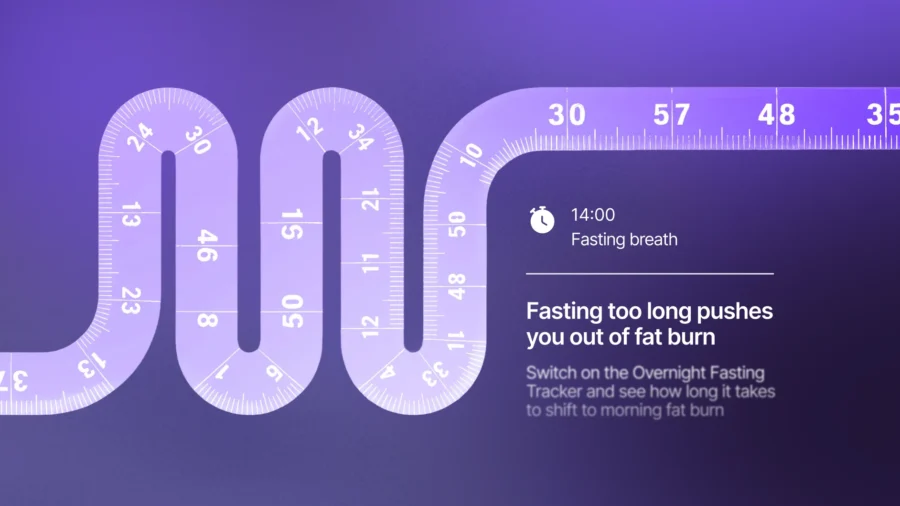
Lumen can also help you determine exactly how long to fast for your body to maximize fat burn and avoid muscle breakdown. It does this by identifying when your body shifts from burning fats to carbs during your fast. That means your glycogen stores are critically low, you’ve reached your fasting sweet spot, and should break your fast and eat something nutritious.
7. Add CoQ10 to your diet
CoQ10 is a critical part of the electron transport chain in mitochondria, and also a strong antioxidant. CoQ10 levels in the body tend to decline with age, and if statins are used, they block a pathway that produces both cholesterol and CoQ10, causing further reduction. Men often report fatigue, reduced exercise tolerance, and muscle pains. A diet rich in antioxidants (berries, colorful vegetables, olive oil, fish, nuts) and sometimes CoQ10 supplementation can help.
8. Tame your stress
Chronic stress is a silent metabolic disruptor, especially for men navigating andropause. Chronic stress keeps cortisol levels constantly elevated, which can make mitochondria overdependent on carbs for fuel. Over time, they forget how to burn fat efficiently. This directly hinders your metabolic flexibility.
Incorporate daily practices like meditation, deep breathing exercises, spending time in nature, or engaging in enjoyable hobbies. Prioritizing stress management helps balance cortisol levels, allowing your body to access fat stores more readily and improve metabolic function.
Get ahead of andropause with the right health hacks
The journey through andropause doesn’t have to mean a decline in metabolic health or a losing battle against weight gain. By understanding the intricate connection between declining testosterone and metabolic flexibility, you gain the power to make meaningful changes.
Through strategic nutrition, consistent weightlifting, zone 2 training, and stress management, you can reverse the tide, build a more resilient metabolism, and achieve sustainable weight loss.
It’s time to stop fighting your body and start working with it. Embrace these strategies, listen to your body’s signals, and consider how tools like Lumen can provide the personalized insights needed to navigate andropause with confidence and achieve lasting metabolic health.
FAQs
Q: What is andropause?
A: Andropause is a natural process in men, typically between ages 40-60, characterized by a gradual decline in testosterone levels, leading to symptoms like fatigue, low libido, muscle loss, and weight gain.
Q: How does andropause cause weight gain?
A: Declining testosterone levels during andropause lead to decreased muscle mass and increased fat storage, particularly around the abdomen. Less muscle means a slower metabolism, making it harder to burn fat.
Q: What is metabolic flexibility?
A: Metabolic flexibility is your body’s ability to efficiently switch between using carbs and fats for energy. When you’re metabolically flexible, you can easily burn fat when carbs aren’t available, which is crucial for sustainable weight management.
Q: Can I reverse metabolic inflexibility?
A: Yes, metabolic inflexibility is largely influenced by lifestyle factors and can be improved through strategic changes in nutrition, exercise (especially weightlifting and zone 2 cardio), stress management, and sleep quality.
Q: How can Lumen help with andropause-related weight gain?
A: Tools like Lumen can provide real-time insights into whether your body is primarily burning carbs or fat, tailor your nutrition plan to boost metabolic flexibility, help you see how your body responds to different foods and activities, and enable you to track your metabolic flexibility trends.
Sources
[1] Cheng, H., Zhang, X., Li, Y., Cao, D., Luo, C., Zhang, Q., Zhang, S., & Jiao, Y. (2024). Age-related testosterone decline: mechanisms and intervention strategies. Reproductive biology and endocrinology : RB&E, 22(1), 144. https://doi.org/10.1186/s12958-024-01316-5
[2] Zhu, W. B., Zhao, H. B., Wang, G. Z., Wang, Z. L., & Wang, S. Q. (2025). The effects of testicular aging on Leydig cells and the application of stem cells in restoring Leydig cells function. Reproductive biology and endocrinology : RB&E, 23(1), 147. https://doi.org/10.1186/s12958-025-01487-9
[3] Buratto, J., Kirk, B., Phu, S., Vogrin, S., & Duque, G. (2023). Safety and Efficacy of Testosterone Therapy on Musculoskeletal Health and Clinical Outcomes in Men: A Systematic Review and Meta-Analysis of Randomized Placebo-Controlled Trials. Endocrine practice : official journal of the American College of Endocrinology and the American Association of Clinical Endocrinologists, 29(9), 727–734. https://doi.org/10.1016/j.eprac.2023.04.013
[4] Traish, A. M., Miner, M. M., Morgentaler, A., & Zitzmann, M. (2011). Testosterone deficiency. The American journal of medicine, 124(7), 578–587. https://doi.org/10.1016/j.amjmed.2010.12.027
[5] Jensen M. D. (2000). Androgen effect on body composition and fat metabolism. Mayo Clinic proceedings, 75 Suppl, S65–S69.
[6] Medina-Urrutia, A., Posadas-Romero, C., Posadas-Sánchez, R., Jorge-Galarza, E., Villarreal-Molina, T., González-Salazar, M.delC., Cardoso-Saldaña, G., Vargas-Alarcón, G., Torres-Tamayo, M., & Juárez-Rojas, J. G. (2015). Role of adiponectin and free fatty acids on the association between abdominal visceral fat and insulin resistance. Cardiovascular diabetology, 14, 20. https://doi.org/10.1186/s12933-015-0184-5
[7] Venkatesan, K., Paulsamy, P., Alqahtani, S., Asiri, Y. I., Alqahtani, T., Alqahtani, A., Sivadasan, D., Ahmed, R., Elfadil, H., & Asseri, K. A. (2025). An update on the role of inflammation in insulin resistance and islet β cell failure: A crosstalk between immune cells, adipose tissue, cytokines, and oxidative stress. Letters in Drug Design & Discovery, 22(3), 100023. https://doi.org/10.1016/j.lddd.2025.100023
[8] Traish, A. M., Abdallah, B., & Yu, G. (2011). Androgen deficiency and mitochondrial dysfunction: Implications for fatigue, muscle dysfunction, insulin resistance, diabetes, and cardiovascular disease. Hormone Molecular Biology and Clinical Investigation, 8(1), 431–444. https://doi.org/10.1515/HMBCI.2011.132
[9] Holesh, J. E. (2023, May 12). Physiology, carbohydrates. StatPearls [Internet]. https://www.ncbi.nlm.nih.gov/books/NBK459280/
[10] Liepinsh, E., Makarova, E., Plakane, L., Konrade, I., Liepins, K., Videja, M., Sevostjanovs, E., Grinberga, S., Makrecka-Kuka, M., & Dambrova, M. (2020). Low-intensity exercise stimulates bioenergetics and increases fat oxidation in mitochondria of blood mononuclear cells from sedentary adults. Physiological reports, 8(12), e14489. https://doi.org/10.14814/phy2.14489
[11] Lopez-Minguez, J., Gómez-Abellán, P., & Garaulet, M. (2019). Timing of Breakfast, Lunch, and Dinner. Effects on Obesity and Metabolic Risk. Nutrients, 11(11), 2624. https://doi.org/10.3390/nu11112624
[12] Kerksick, C. M., Arent, S., Schoenfeld, B. J., Stout, J. R., Campbell, B., Wilborn, C. D., Taylor, L., Kalman, D., Smith-Ryan, A. E., Kreider, R. B., Willoughby, D., Arciero, P. J., VanDusseldorp, T. A., Ormsbee, M. J., Wildman, R., Greenwood, M., Ziegenfuss, T. N., Aragon, A. A., & Antonio, J. (2017). International society of sports nutrition position stand: nutrient timing. Journal of the International Society of Sports Nutrition, 14, 33. https://doi.org/10.1186/s12970-017-0189-4
Disclaimer
The information provided here is strictly informational and educational. It does not serve as medical advice or a health assessment and is not intended to diagnose, treat, cure, or prevent any disease. Consult with your healthcare professional before making any significant changes to your diet or exercise routine.
 Copy article text
Copy text 

Our Lumen editorial desk includes an in-house team of certified and registered nutritionists and dietitians, scientists, researchers, and writers.
See all articles